


Woods are classified into two main groups, softwood and hardwood.
Trees are either coniferous (leaves that stay green all year round) or deciduous (leaves that fall in autumn). The timber that comes from the coniferous tree is known as soft wood and the timber that comes from deciduous trees is known as hard wood.
Some examples:
+Softwood: Cedar, Douglas fir, Fir, Pine, Spruce.
+Hardwood: Ash, Birch, Cherry, Ebony, Mahogany, Oak, Plum, Teak, Walnut, Rubber.
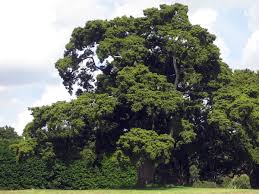
Tōtara a New Zealand native hard wood, which can grows up to 35m high.

Balsa “hard wood” is used by native American to make rafts due to its lightness
SCIENTIFIC CHARACTERS OF WOOD
- Common name
This is the name(s) that everybody uses when talking about the wood. This field may also include trade names that are used by wood dealers to help sell the wood by making it sound more attractive. For a more accurate naming scheme, it is better to use a wood’s scientific name.

“Jatoba Brazilian Cherry” is actually not a cherry tree, but a legume of Fabaceae family
- Scientific name
The scientific or botanical name is a much more precise way of referencing wood.
- Average Dried Weight
This is a measure of a wood’s weight in relation to a preset volume. However, a wood’s weight will also greatly depend on its moisture content (MC). For instance, a board that has just been freshly cut can weight more than double its oven-dry weight. The most common standard of measurement for nearly all wood testing conducted worldwide is at a moisture content of 12%.
- Janka Hardness
This number is incredibly useful in directly determining how well a wood will withstand dents, dings, and wear—as well as indirectly predicting the difficulty in nailing, screwing, sanding, or sawing a given wood species.

Janka hardness testing

Lignum Vitae –Tree of life – is 3 times harder than Oak. It is also chosen as the national tree of the Bahamas and the Jamaican national flower
- Modulus of Rupture
Modulus of Rupture (MOR), sometimes referred to as bending strength, is a measure of a specimen’s strength before rupture. It can be used to determine a wood species’ overall strength; unlike the modulus of elasticity, which measures the wood’s deflection, but not its ultimate strength. That means some species of wood will bow under stress, but not easily break.

Modulus of rupture (MOR) testing
- Elastic Modulus
In the simplest terms, the modulus of elasticity (MOE) measures a wood’s stiffness, and is a good overall indicator of its strength.

Modulus of elasticity (MOE) testing
Technically it is a measurement of the ratio of stress placed upon the wood compared to the strain (deformation) that the wood exhibits along its length
- Crushing Strength
Sometimes known as Compression Strength parallel to the grain, this is a measurement of the wood’s maximum crushing strength when weight is applied to the ends of the wood.

Compression strength testing
This number is a good indicator of the wood’s strength in applications such as deck posts, chair legs, or other circumstances where the load being applied is parallel rather than perpendicular to the grain.
- Dimensional Shrinkage
In addition to begaining or losing moisture from the surrounding air, wood is also has different properties depending on the direction or orientation of the grain, and one of the areas where this property is most clearly seen is in dimensional shrinkage.
A basic measurement of shrinkage—expressed as a percentage—is the amount that the wood shrinks when going from its green to oven dry state.
Volumetric shrinkage tells how much a wood species will shrink, but it doesn’t indicate the direction of the shrinkage.

LiK WOOD MATERIAL COMPARISON
|
|
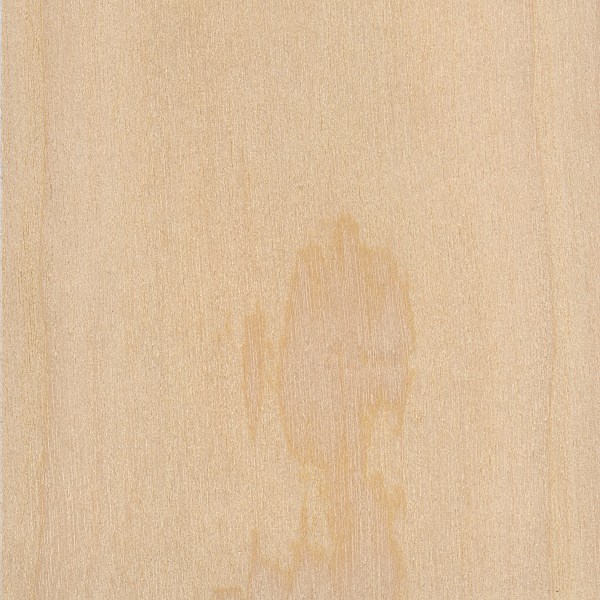
PINE EAST CANADA
|
PINE WEST CANADA
|
PINE FINLAND |
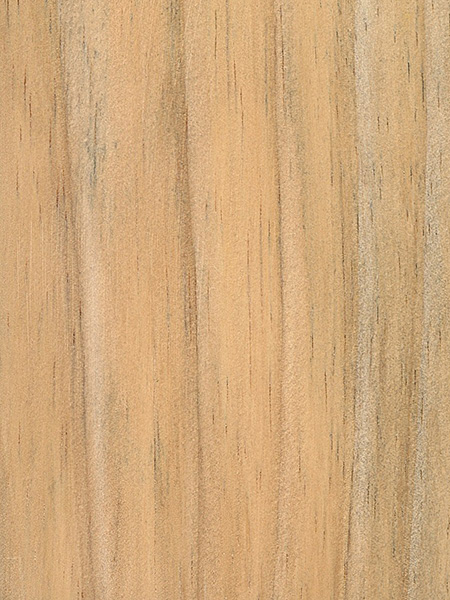
PINE NEW ZEALAND
|
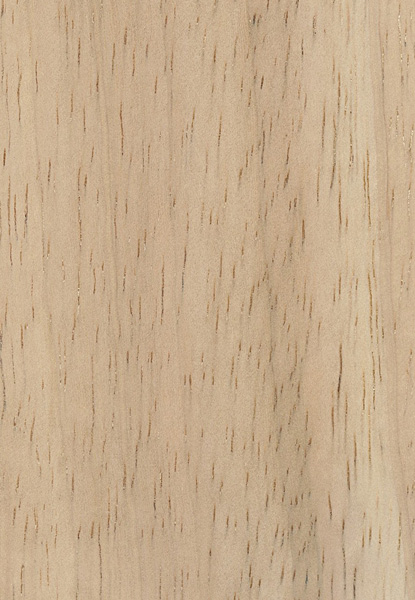
RUBBERWOOD |
|
LiK Vietnam |
P |
P |
- |
P |
P |
|
Pattern |
|
|
|
|
|
|
Common Name |
Eastern White Pine |
Western White Pine, Idaho White Pine |
Scots Pine |
Radiata Pine, Monterey Pine, Insignis Pine |
Plantation Hardwood, Para Rubber tree
|
|
Distribution |
Eastern North America and plantation throughout its native region. |
Mountain regions of western North America |
Europe and northern Asia |
Native to California and the southern hemisphere |
Native to Brazil, but extensively in tropical regions, especially in Asia |
|
Tree Tall |
20-30 m |
30-46 m |
20-35 m |
24-30 m |
23-30 m |
|
Average Dried Weight |
400 kg/m3 |
435 kg/m3 |
550 kg/m3 |
515 kg/ m3 |
595 kg/m3 |
|
Janka Hardness |
1,690 N |
1,870 N |
2,420 N |
3,150 N |
4,280 N |
|
Modulus of Rupture |
59.3 MPa |
66.9 Mpa |
83.3 MPa |
79.2 MPa |
71.9 MPa |
|
Elastic Modulus |
8.55 GPa |
10.07 GPa |
10.08 GPa |
10.06 GPa |
9.07 GPa |
|
Crushing Strength |
33.1 MPa |
34.8 MPa |
41.5 MPa |
41.6 MPa |
42.1 MPa |
|
Shrinkage |
Radial: 2.1%, Tangential: 6.1%, Volumetric: 8.2%. |
Radial: 4.1%, Tangential: 7.4%, Volumetric: 11.8%. |
Radial: 5.2%, Tangential: 8.3%, Volumetric: 13.6%. |
Radial: 3.4%, Tangential: 6.7%, Volumetric: 10.7%. |
Radial: 2.3%, Tangential: 5.1%, Volumetric: 7.5%. |


FSCCERTIFICATION

The Forest Stewardship Council (FSC) is an international non-profit, multi-stakeholder organization established in 1993 to promote responsible management of the world’s forests. The FSC does this by setting standards on forest products, along with certifying and labeling them as eco-friendly.
The FSC’s stated mission is to "promote environmentally appropriate, socially beneficial and economically viable management of the world's forests". To this end the body has published a Global Strategy with five goals:
- Advancing globally responsible forest management.
- Ensure equitable access to the benefits of FSC systems.
- Ensure integrity, credibility and transparency of the FSC system.
- Create business value for products from FSC certified forests.
- Strengthen the global network to deliver on goals 1 through 4.
These goals are being promoted by activities which are managed and developed through six program areas: forests, chain of custody, social policy, monitoring and evaluation, quality assurance and ecosystem services
Sources:
Special thank to Eric Meier of https://www.wood-database.com/
https://www.technologystudent.com/